
01. September 2026.
Collective bargaining at JKP “Gradska Čistoća” Novi Pazar was successfully concluded with the signing of a Special Collective Agreement for employees of JKP “Gradska Čistoća” Novi Pazar, following peaceful settlement proceedings in a collective labour dispute before the Republic Agency for Peaceful Settlement of Labour Disputes.
Conciliation proceedings before the Agency were conducted during the final stage of collective bargaining. The parties’ positions on the content of the collective agreement had already been largely harmonised, but the conclusion of the agreement was stalled at the final stage of negotiations. With the support of the Agency, the dialogue continued and the conditions were created for collective bargaining to be successfully concluded.
During the proceedings, led by Agency conciliator Emil Turković, three hearings were held with the participation of representatives of the trade union, the employer, and the City of Novi Pazar as the founder of JKP “Gradska Čistoća”. The proceedings were successfully concluded with the signing of the Special Collective Agreement, bringing the collective bargaining process to a successful conclusion.
Following the proceedings, the conciliator issued a Recommendation calling on the parties to continue seeking to resolve individual and collective labour disputes peacefully before the Republic Agency for Peaceful Settlement of Labour Disputes.
The dispute at JKP “Gradska Čistoća” Novi Pazar demonstrates that conciliation can play an important role even in the final stages of collective bargaining, when the parties’ positions have already been largely aligned. The involvement of a conciliator in such cases can help preserve dialogue and create the conditions for an ongoing collective bargaining process to be successfully concluded.
31. August 2026.
The collective labour dispute at General Hospital Paraćin was resolved through an agreement between the employer and the Trade Union of Nurses and Medical Technicians of Serbia at General Hospital Paraćin. With the support of the Republic Agency for Peaceful Settlement of Labour Disputes, the parties adopted the Recommendation of the Conciliation Board and concluded an Agreement on the Resolution of the Collective Labour Dispute.
The dispute centred on working conditions and employees’ concerns regarding the Risk Assessment Act. Rather than allowing the disagreements to escalate further, the proceedings created an opportunity for direct discussion of the employees’ demands and the ways in which these issues could be considered and addressed within the institution.
The proceedings were led by Agency conciliator Dragana Miletić, and the Conciliation Board unanimously adopted a Recommendation setting out specific next steps. The parties agreed to continue considering issues related to working conditions and the implementation of the Risk Assessment Act through further dialogue, with the active participation of employees, and to work together towards finding appropriate solutions.
The agreement reached by the parties was formalised in an Agreement on the Resolution of the Collective Labour Dispute, through which they committed to continuing cooperation and social dialogue, with the aim of improving working conditions and the material and social status of employees, while also enhancing the functioning of the institution and preserving its reputation.
The resolution reached at General Hospital Paraćin demonstrates that peaceful settlement of a dispute does not necessarily have to end with an agreement on the disputed issue alone. It can also establish a mechanism for continuing dialogue and addressing the issues that led to the dispute in the first place.
28. August 2026.
A dispute between the United Trade Unions of Serbia “Sloga” and the School with a Dormitory for Students with Hearing Impairments in Kragujevac was successfully resolved through conciliation proceedings before the Republic Agency for Peaceful Settlement of Labour Disputes.
At the very first hearing, the parties reached full agreement on all disputed issues and concluded an Agreement on the Resolution of the Collective Labour Dispute.
The dispute concerned the exercise of the right to trade union organisation and activities, specifically the provision of adequate premises and technical conditions for the operation of the trade union within the institution.
During the proceedings, the possibilities for resolving the disputed issues were considered through constructive dialogue between the representatives of the trade union and the employer. At the conciliator’s suggestion, a joint inspection of the institution’s premises was also conducted. In this way, a concrete and sustainable solution was found that enables the trade union to operate without hindrance, while at the same time taking into account the specific nature of the School’s activities and the need for the educational process to proceed without disruption.
The agreement regulates the provision of a dedicated room for trade union activities and meetings, the installation of a separate trade union notice board, the use of technical equipment and communication resources, as well as other matters relevant to the unhindered exercise of trade union activities.
The proceedings were led by Jelena Čanović Spasojević, a conciliator at the Republic Agency for Peaceful Settlement of Labour Disputes, who chaired the Conciliation Board.
The successful resolution of this dispute at the very first hearing demonstrates the value of peaceful settlement of collective labour disputes. Issues directly affecting relations between the employer and the trade union were resolved through dialogue and agreement, without further escalation of the dispute.
25. August 2026.
Proceedings before the Republic Agency for Peaceful Settlement of Labour Disputes have successfully concluded a collective labour dispute between the Industrial Trade Union of Serbia and DAD Draxlmaier Automotive d.o.o. Zrenjanin, concerning the method of payment of trade union membership fees.
Nenad Domjeskov was appointed as the conciliator handling the case, and a Conciliation Board was established, comprising, in addition to the conciliator, representatives of the trade union and the employer. During the proceedings, the parties presented their positions and considered the documentation and circumstances that had led to the dispute.
Through the skilful conduct of the proceedings by conciliator Nenad Domjeskov, and through open dialogue and an exchange of arguments, the parties brought their positions closer and clarified the issues that were the subject of the dispute. The representative of the Industrial Trade Union of Serbia accepted the arguments presented by the employer's representative, following which the Conciliation Board unanimously adopted a Recommendation on how to resolve the dispute.
The Recommendation established the procedure for the future payment of trade union membership fees and advised the parties to resolve any potential future disputes through dialogue and cooperation, based on mutual respect.
By successfully concluding the proceedings, the parties demonstrated their willingness to address contentious issues through social dialogue and cooperation. This once again confirmed the importance of peaceful settlement of collective labour disputes in finding mutually acceptable solutions, maintaining good relations and strengthening social dialogue.
31. July 2026.
Conciliation proceedings were conducted before the Republic Agency for Peaceful Settlement of Labour Disputes in a collective labour dispute between JKP “Temerin” and the Independent Trade Union of JKP “Temerin” concerning the conclusion of a new collective agreement. The proceedings resulted in the parties moving closer towards common ground and in the adoption of a conciliator’s Recommendation, providing a basis for the continuation of collective bargaining and the pursuit of an amicable solution.
The proceedings were initiated due to disagreements between the parties during the collective bargaining process, primarily concerning the coefficient system for calculating wages, the valuation of working conditions, the implementation of the Risk Assessment Act, and certain material rights of employees. During the proceedings, led by Agency conciliator Milica Midžović, hearings were held at which the parties presented their positions and proposals and considered possibilities for reaching a compromise.
Taking into account the progress achieved during the proceedings and the constructive approach of both parties, the conciliator assessed that there were realistic prospects for resolving the remaining disputed issues by mutual agreement. Through the Recommendation, the parties were encouraged to continue collective bargaining in good faith, based on mutual trust and respect, with the aim of concluding a new collective agreement.
This case once again demonstrates the importance of peaceful settlement of collective labour disputes as a mechanism that enables the parties, with the professional support of a conciliator, to maintain social dialogue and seek a sustainable and mutually acceptable solution through direct negotiations.
10. July 2026.
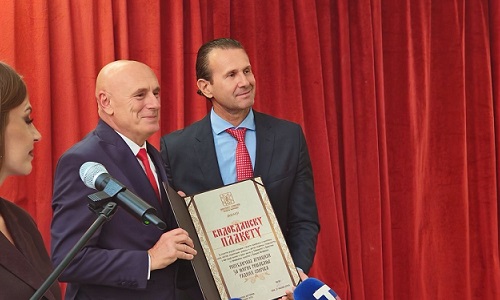
On the occasion of the celebration of the Day of the University of Priština temporarily located in Kosovska Mitrovica and the 55th anniversary of this higher education institution, the Republic Agency for Peaceful Settlement of Labour Disputes was awarded the Vidovdan Plaque in recognition of its contribution to the development of cooperation and the support provided to the University. The award was received on behalf of the Agency by its Director, Dr Ivica Lazović.
“Some awards have a special significance precisely because they are unexpected. The Vidovdan Plaque, which I received on behalf of the Republic Agency for Peaceful Settlement of Labour Disputes, is truly a great honour. At the same time, it represents an encouragement to continue supporting the University in its mission, as it is an institution that has been preserving knowledge, education and the identity of our people in Kosovo and Metohija for decades. This recognition also belongs to all employees of the Agency, whose work has contributed to us being recognised as a reliable partner and friend of the University,” said the Director of the Agency, Dr Ivica Lazović.
The Vidovdan Plaque represents a significant recognition for the Republic Agency for Peaceful Settlement of Labour Disputes and confirms the successful cooperation established with the University of Priština temporarily located in Kosovska Mitrovica. For many years, the two institutions have successfully cooperated through joint professional activities, the exchange of knowledge and experience, as well as through support for the development of peaceful settlement of labour disputes, social dialogue and labour law practice.
This recognition further strengthens the commitment of the Republic Agency for Peaceful Settlement of Labour Disputes to continue developing partnerships with higher education institutions and, in cooperation with the academic community, contribute to the advancement of labour law expertise, strengthening of social dialogue and promotion of peaceful settlement of labour disputes.
30. June 2026.
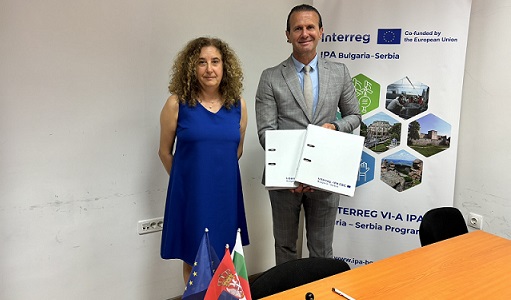
The Republic Agency for Peaceful Settlement of Labour Disputes has commenced the implementation of its first cross-border project aimed at improving the system of peaceful settlement of labour disputes in the cross-border area between Serbia and Bulgaria.
The project “Cross-border Dialogue for Alternative Labour Dispute Resolution – Strengthening Mediation, Conciliation and Arbitration Services” is being implemented in partnership with the National Institute for Conciliation and Arbitration of the Republic of Bulgaria, within the framework of the Interreg VI-A IPA Bulgaria–Serbia Programme 2021–2027.
The implementation of the project officially started with the signing of the Grant Agreement on 24 June 2026 in Sofia, which created the conditions for carrying out project activities over the next two years.
The objective of the project is to strengthen the system of peaceful settlement of labour disputes through the development of joint tools, exchange of experiences and good practices, strengthening of institutional capacities, as well as improving the accessibility of conciliation and arbitration services for citizens and employers in the cross-border area between Serbia and Bulgaria.
Through joint activities, the partners will develop modern solutions and mechanisms that will contribute to more efficient, accessible and high-quality peaceful settlement of labour disputes, while strengthening cross-border cooperation and social dialogue.
The particular importance of the project lies in the fact that the Republic Agency for Peaceful Settlement of Labour Disputes is participating in an international project as the Lead Partner for the first time. This represents an important step in the further development of the Agency’s international cooperation and confirms its professional expertise and institutional capacity to prepare and implement complex international projects.
Through the implementation of this project, the Agency continues to strengthen the system of peaceful settlement of labour disputes and improve access to justice in the field of labour, with the aim of providing citizens and employers with simpler, faster and more efficient access to peaceful dispute resolution mechanisms, while promoting a culture of dialogue and peaceful resolution of disputes.
08. June 2026.
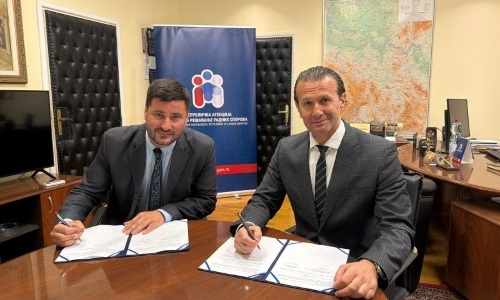
A Cooperation Agreement between the Republic Agency for Peaceful Settlement of Labour Disputes and the Institute of Comparative Law was signed on 8 June 2026 at the premises of the Republic Agency for Peaceful Settlement of Labour Disputes.
The Agreement was signed by the Director of the Republic Agency for Peaceful Settlement of Labour Disputes, Dr Ivica Lazović, and the Acting Director of the Institute of Comparative Law, Dr Miloš Stanić. The signing ceremony was also attended by Dr Jovana Rajić Ćalić, Research Associate at the Institute of Comparative Law, as well as Dragana Andonovska and Jelena Golubović, representatives of the Republic Agency for Peaceful Settlement of Labour Disputes.
By signing the Agreement, a framework was established for strengthening cooperation in areas of mutual interest, with a particular focus on scientific research, the development and promotion of alternative dispute resolution, as well as the exchange of knowledge, experience and good practices. The cooperation will be implemented through joint projects, conferences, seminars, round tables and other activities aimed at strengthening the capacities of both institutions and further developing the system of peaceful settlement of labour disputes.
The signed Agreement represents an important step towards deepening cooperation between scientific research institutions and institutions responsible for the practical application of law, with the aim of further developing labour law theory and practice in the Republic of Serbia.
29. May 2026.
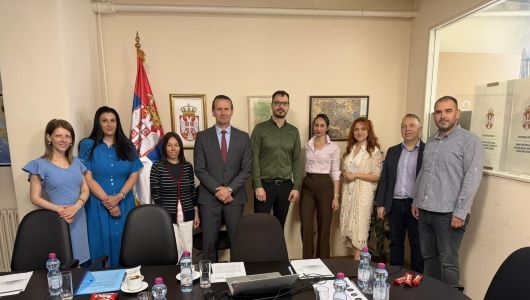
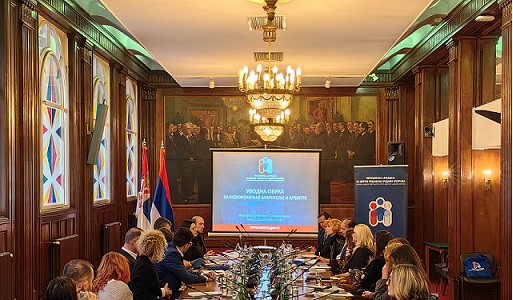
On 29 May 2026, the Republic Agency for Peaceful Settlement of Labour Disputes held an Introductory Workshop marking the beginning of activities related to the implementation of the second cycle of the Common Assessment Framework (CAF).
The workshop was attended by the Agency’s Self-Assessment Group, whose members will actively participate in the forthcoming period in the process of analysing the institution’s performance, identifying areas for improvement, and defining new development measures.
The workshop was organised with the professional support of the CAF support team, consisting of Goran Paštrović, external CAF expert, and Slaven Bukarica, ReSPA Quality Management Officer. During the workshop, participants were introduced to the methodology for conducting the CAF self-assessment, the different phases of the process, the roles and responsibilities of the Self-Assessment Group members, as well as the activities planned within the second CAF cycle.
A special part of the workshop was dedicated to presenting the results achieved during the first cycle of CAF implementation in the Agency. The most significant achievements in the areas of improving organisational processes, developing the quality management system, and strengthening institutional capacities were presented, as well as the activities that contributed to obtaining the prestigious “CAF Effective User” label. Participants had the opportunity to learn about the implemented improvement measures and their impact on the Agency’s work and overall functioning.
Special attention was also devoted to presenting the CAF model as a modern European quality management tool in public administration, which promotes organisational learning, the development of a quality culture, and continuous improvement of institutional performance.
The introductory workshop officially marked the beginning of the operational phase of the second CAF cycle at the Republic Agency for Peaceful Settlement of Labour Disputes. Building on the results achieved during the first cycle and the fact that the Agency was the first institution in the Republic of Serbia to obtain the “CAF Effective User” label, the new cycle will focus on further strengthening institutional capacities, improving internal processes, and developing high-quality services for users.
Through the implementation of these activities, the Agency continues to demonstrate its commitment to the principles of excellence, responsible governance, and continuous improvement, in line with the best European practices in the field of public administration.
25. May 2026.
In the process of peaceful settlement of a collective labor dispute conducted regarding the conclusion of a collective agreement in the Municipality of Krupanj, the parties to the dispute reached an agreement on how to overcome the disputed issues and continue social dialogue.
The procedure was initiated at the proposal of the Organization of the Independent Trade Union of the Municipality of Krupanj, with the consent of the other party – the Municipality of Krupanj. Assistant Professor Dr. Aleksandar Antić was appointed as the conciliator in this procedure and, in accordance with the law, chaired the Conciliation Board, which also included representatives of both the trade union and the employer.
Following the hearings and the harmonization of positions regarding the disputed issues, the Conciliation Board unanimously adopted a Recommendation on the method for resolving the dispute. The Recommendation proposed that the parties conclude a collective agreement based on the agreed draft text of the collective agreement.
The agreement reached has created conditions for the continuation of constructive negotiations and the preservation of stable relations between the employer and employees. By reaching this agreement, representatives of the trade union and the employer confirmed that solutions acceptable to both parties can be achieved through dialogue, mutual understanding, and cooperation, further emphasizing the importance of the peaceful settlement of labor disputes and the strengthening of social dialogue.
20. May 2026.
The Republic Agency for the Peaceful Settlement of Labor Disputes has launched the second cycle of implementation of the Common Assessment Framework (CAF), in cooperation with the Regional School of Public Administration (ReSPA), continuing its activities aimed at improving the quality of work and further developing institutional capacities.
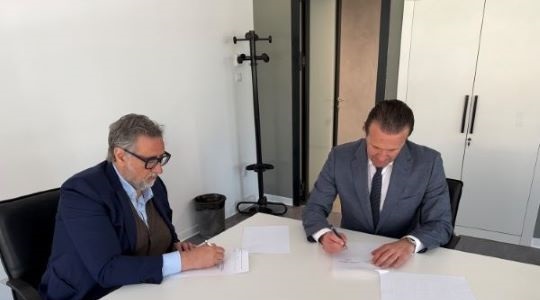
On the occasion of the launch of the new cycle, Dr. Ivica Lazović, Director of the Republic Agency for the Peaceful Settlement of Labor Disputes, and Jelena Mrdak, Acting Director of the Regional School of Public Administration (ReSPA), signed the Project Assignment, formally initiating the implementation process of the second CAF cycle within the Agency.
The Republic Agency for the Peaceful Settlement of Labor Disputes was the first institution in the Republic of Serbia to receive the prestigious “CAF Effective User” label, confirming a high level of commitment to the principles of quality management and continuous improvement. Building on the results achieved during the first cycle, the new cycle is focused on further strengthening the organizational culture of quality, improving performance management, and enhancing mechanisms for more efficient institutional functioning.
Particular emphasis will be placed on analyzing the results achieved during the previous period, evaluating the implemented activities, and defining new measures and priorities that will contribute to the further improvement of the Agency’s work and the quality of services provided to its users.
Activities within the second cycle will be carried out with mentoring support from experts of the Regional School of Public Administration (ReSPA), as well as engaged CAF specialists.
CAF (Common Assessment Framework) is a European quality management model designed for public administration institutions. It is based on organizational self-assessment, active participation of employees and managers, and the planning and implementation of activities aimed at the continuous improvement of work processes and service delivery to citizens.
By implementing the second CAF cycle, the Republic Agency for the Peaceful Settlement of Labor Disputes continues to improve its internal processes and strengthen institutional capacities, reaffirming its commitment to the development of a modern, efficient, and high-quality public administration based on the principles of excellence and continuous improvement.
15. May 2026.
With the aim of improving access to justice and promoting the broader use of out-of-court mechanisms for resolving labor law disputes, the Republic Agency for the Peaceful Settlement of Labor Disputes and the Higher Court in Belgrade signed a Cooperation Agreement. The agreement was signed by Dr. Ivica Lazović, Director of the Republic Agency for the Peaceful Settlement of Labor Disputes, and Dragan Milošević, President of the Higher Court in Belgrade.
Through this agreement, the two institutions expressed their shared intention to contribute, within the scope of their respective competencies, to the development, promotion, and greater accessibility of alternative methods for resolving labor disputes.
The cooperation will focus on presenting the possibilities and advantages of peaceful settlement of labor disputes to parties, attorneys, and the general public, organizing joint professional events, consultations, conferences, open-door days, and information sessions, as well as exchanging information of importance for the further development of alternative dispute resolution mechanisms in the field of labor law.
A particularly significant aspect of the Agreement is the establishment of practical mechanisms for cooperation between the Higher Court in Belgrade and the Agency. Within this framework, parties involved in labor disputes before the court will, in accordance with the court’s legal authority, be informed about the possibility of resolving their disputes peacefully before the Agency. In addition, through the Alternative Dispute Resolution Information Service, they will have access to informational materials, contact details, and other relevant information regarding proceedings before the Agency.
The signing of this Agreement represents an important step toward strengthening institutional cooperation in the field of labor law, as well as advancing the peaceful settlement of labor disputes as an efficient, accessible, and voluntary mechanism for the protection of employment rights.
07. May 2026.
In the process of peaceful settlement of a collective labor dispute at Essex Solutions – Balkan d.o.o. Zrenjanin, conducted regarding the conclusion of a new collective agreement, the parties to the dispute reached an agreement and signed an Agreement on the Resolution of the Collective Labor Dispute.
The procedure was initiated at the proposal of the Trade Union Organization of the Independent Metalworkers’ Trade Union of Serbia “Essex Furukawa Magnet Wire”, with the consent of the employer.
Prof. Dr. Sanja Škorić was appointed as the conciliator in this procedure and, in accordance with the law, chaired the Conciliation Board, whose members also included representatives of both the trade union and the employer.
At the first hearing, held on April 23, 2026, at the employer’s premises, the parties aligned their positions on the disputed issues, after which the Conciliation Board unanimously adopted a Recommendation on the method for resolving the dispute.
Based on the adopted recommendation, the parties concluded an Agreement defining the next steps aimed at overcoming the disputed issues and continuing social dialogue.
The agreement reached has created conditions for the continuation of constructive negotiations and the preservation of stable relations between the employer and employees.
By signing this agreement, the employer and trade union representatives confirmed that solutions acceptable to both parties can be achieved through dialogue, mutual understanding, and cooperation, further emphasizing the importance of the peaceful settlement of labor disputes.
28. April 2026.
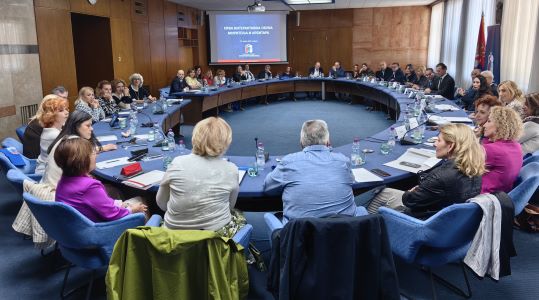
On 27 April 2026, the first Interactive Training for conciliators and arbitrators of the Republic Agency for the Peaceful Settlement of Labour Disputes in this year was held at the Palace “Serbia” in Belgrade. The event gathered a large number of participants and once again confirmed the importance of continuous exchange of knowledge and experience.
The training was opened by the Director of the Agency, Dr Ivica Lazović, who welcomed the participants and briefed them on recent developments in the Agency’s work, the results achieved in the previous period, as well as the plans for further development and improvement of the system for the peaceful settlement of labour disputes.
Within the first session, a panel discussion titled “Conciliation and Arbitration in the Era of Technological Change” was held, featuring Prof. Dr Senad Jašarević, Prof. Dr Goran Obradović, Prof. Dr Nataša Petrović Tomić, and Prof. Dr Branko Lubarda, former judge of the European Court of Human Rights in Strasbourg, whom conciliators and arbitrators had the opportunity to hear for the first time following the completion of his mandate. The panelists highlighted the increasingly significant impact of digitalisation and new technologies on procedures for the peaceful settlement of labour disputes, as well as the need to further align existing mechanisms with modern developments.
The second part of the training focused on conciliation in practice, where conciliators Assistant Prof. Dr Aleksandar Antić, Dragana Miletić and Dr Jelena Gluščević shared their experiences. Through practical examples, they pointed to the challenges conciliators face in their work, as well as the importance of exchanging experiences as a key element for improving practice.
In the afternoon session, Prof. Dr Katarina Erić delivered a highly engaging lecture on “Public Speaking and Communication Skills”, emphasizing the importance of communication skills in the processes of peaceful dispute resolution, as well as in building professional authority.
The final segment of the training was dedicated to arbitration in practice, focusing on procedural challenges and legal dilemmas, and included presentations by arbitrators Igor Kokanović, Assistant Prof. Dr Marija Dragićević Đorđević and Milun Petković. The panel addressed important practical issues and pointed to the need for further strengthening efficiency and legal certainty in arbitration proceedings.
Following the presentations, a lively and constructive discussion took place, during which participants exchanged views and experiences on current challenges in the field of peaceful settlement of labour disputes, further confirming the value of such events and the importance of direct dialogue.
27. March 2026.
In the process of peaceful settlement of a collective labour dispute at the “Zavod za udžbenike” LLC, initiated in relation to the exercise of the right to trade union organisation and activity, the parties to the dispute once again reached an agreement. On that occasion, a Recommendation was adopted, followed by the conclusion of an Agreement on the settlement of the collective labour dispute.
Building on the positive experience from 2023, when a similar dispute was successfully resolved through an agreement, both parties agreed to appoint Prof. Dr Živko Kulić as conciliator in this procedure as well.
In accordance with the law, a Conciliation Board was established at the first hearing, composed of the conciliator and representatives of both parties to the dispute. Following three hearings, a Recommendation on the manner of dispute resolution was adopted, on the basis of which a final agreement was reached and an Agreement was concluded, thereby resolving all outstanding issues.
Once again, the employer “Textbook Institute” LLC and the Trade Union of the Textbook Institute confirmed that constructive social dialogue can lead to efficient and sustainable solutions. Their decision to resolve the dispute peacefully represents an example of good practice, in line with the recommendations of the Government of the Republic of Serbia that labour disputes should be resolved through dialogue and mutual agreement.
23. March 2026.
On Friday, 20 March 2026, the Republic Agency for the Peaceful Settlement of Labour Disputes organized an introductory training for newly appointed conciliators and arbitrators at the National Assembly of the Republic of Serbia (Green Hall), selected through the two most recent public calls. The training was delivered within the framework of the 2026 Special Professional Development Programme for conciliators and arbitrators.
The aim of the training was to provide newly appointed conciliators and arbitrators with the necessary knowledge and skills for independent work in practice. The programme covered key procedural aspects, the course of conciliation and arbitration proceedings, as well as the roles, responsibilities and standards of conduct in these processes. For participants with prior experience, the training also served as an opportunity to further harmonise practice and open discussions on issues relevant to improving performance.
The training was opened by Dr Ivica Lazović, Director of the Agency, who emphasised the importance of continuous professional development for the efficient and high-quality resolution of labour disputes.
During the working sessions, some of the most experienced conciliators and arbitrators – Miljko Valjarević, Slađana Andrić, Srđan Dobrica and Olga Vučković Kićanović – presented practical aspects of conducting proceedings, shared their experience from specific cases, and highlighted key challenges encountered in practice. Through an interactive approach and exchange of views, participants had the opportunity to gain concrete knowledge and valuable insights for their future work.
The training concluded with a discussion and exchange of experiences, laying the groundwork for further cooperation and mutual support among conciliators and arbitrators within the system of peaceful settlement of labour disputes.
09. March 2026.
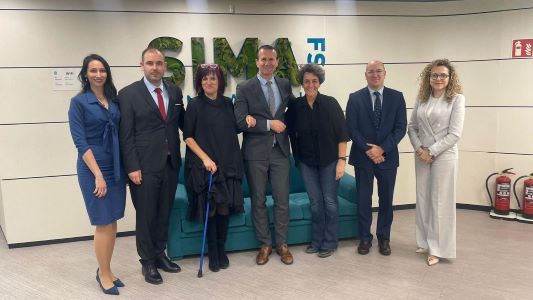
At the invitation of the Spanish Foundation of the Interconfederal Service for Mediation and Arbitration (Foundation Servicio Interconfederal de Mediación y Arbitraje Foundation – SIMA-FSP), the Republic Agency for the Peaceful Settlement of Labour Disputes visited this institution in Madrid from 3 to 4 March. The visit was organized with the aim of exchanging experiences, strengthening institutional cooperation, and becoming acquainted with models for the prevention and resolution of collective labour disputes within the Spanish system of industrial relations.
Opening remarks at the beginning of the programme were delivered by the Director of SIMA-FSP, Beatriz Losada Crespo, a representative of the Ministry of Labour, Mr. Marcos José Pérez Sánchez, and the Director of the Republic Agency for the Peaceful Settlement of Labour Disputes, Dr. Ivica Lazović. Dr. Lazović presented the competences, organization, and achievements of the Agency in the Republic of Serbia, as well as the development of the system of peaceful labour dispute resolution in the country. The practical experience and competences of SIMA-FSP were also presented by Eva Ruiz Colomé and Diego Rubiera.
During the first working day, representatives of the SIMA-FSP legal service presented the stages of the mediation procedure, communication techniques with the parties to a dispute, methods for facilitating dialogue, and tools used to overcome deadlocks in negotiations. Special attention was devoted to managing high-conflict situations, as well as to concrete examples from SIMA-FSP practice.
Within the programme, the preventive role of the institution in the system of peaceful labour dispute resolution was also discussed, including mechanisms for the early identification of potential disputes and advisory support to social partners aimed at preventing escalation and strengthening social dialogue. Procedures applied in situations where a strike has been announced or is already underway were also presented, as well as the role of mediation as a mandatory step in resolving disputes that may lead to a strike.
On the second day of the visit, members of the Supervisory Committee responsible for monitoring the implementation of the ASAC Agreement (Agreement on Autonomous Resolution of Labour Disputes) presented the legal and institutional framework of SIMA-FSP, its position within the Spanish system of labour relations, as well as its relations with public administration and social partners. Representatives of Spanish social partners (Administración General del Estado – General State Administration, Confederación Española de Organizaciones Empresariales – Spanish Confederation of Employers’ Organizations, Confederación Española de la Pequeña y Mediana Empresa – Spanish Confederation of Small and Medium-Sized Enterprises, Comisiones Obreras – Workers’ Commissions, and Unión General de Trabajadores – General Union of Workers) attended the meeting.
During the meeting with the Director of the institution, the practice of mediation in collective labour disputes of cross-sectoral or interregional importance was presented in greater detail, as well as the role of SIMA-FSP in situations of deadlock in collective bargaining. The discussion also addressed the system of arbitration, its legal nature, the conditions for initiating proceedings, and the relationship between mediation and arbitration within the Spanish system of peaceful labour dispute resolution.
A special segment of the programme was devoted to the selection, status, and training of mediators and arbitrators, including criteria for appointment, programmes of initial and continuous training, as well as quality-control mechanisms and ethical standards that guarantee impartiality in proceedings.
This visit enabled an exchange of experiences and good practices between two institutions that play an important role in strengthening social dialogue and improving the system of peaceful labour dispute resolution. On this occasion, particular emphasis was placed on the importance of preventive action and cooperation with social partners as key mechanisms for the timely resolution of disputes and the prevention of their escalation.
23. February 2026.
Through the Republic Agency for the Peaceful Settlement of Labour Disputes, two proceedings initiated on the grounds of workplace harassment have been successfully concluded. In both cases, the parties opted for a peaceful resolution and concluded agreements, thereby creating the conditions for regulating their mutual relations and continuing their professional cooperation.
The proceedings were conducted by arbitrator Živko Kulić, whose professional and impartial management of the process, through several hearings, enabled constructive dialogue between the parties and contributed to reaching an amicable settlement, with the aim of normalizing relations and ensuring the smooth functioning of the work process.
In the case concerning the company Alma Quattro d.o.o. Belgrade, after three hearings the parties concluded an agreement by which they committed themselves to responsible and professional conduct in an atmosphere of mutual respect and cooperation. The employer undertook to organize work in a manner that ensures conditions for the uninterrupted performance of duties, as well as to contribute to eliminating the causes of misunderstandings that led to the initiation of the proceedings.
In the second case, conducted within a state authority, the Administration for the Enforcement of Criminal Sanctions, after four hearings the parties reached an agreement regulating the manner of mutual communication, respect for professional standards, and the rules of conduct within the work process, with the aim of preserving stable and functional relations within the service.
Both the private company and the state authority demonstrated a high level of responsibility and readiness to resolve disputes in a constructive manner, in cooperation with employees and with the support of the Agency, thereby providing an example of good practice in regulating labour relations and fostering a professional working environment.
23. February 2026.
In the first two months of this year, more than 700 procedures for the peaceful settlement of individual labour disputes have been initiated before the Republic Agency for the Peaceful Settlement of Labour Disputes by employees and the management of JPKP “Lazarevac”. The decision to initiate the procedure before the Agency represents an example of a constructive approach and the willingness of both parties to resolve disputed issues without initiating court proceedings.
Opting for this mechanism is in line with the recommendation of the Government of the Republic of Serbia that beneficiaries of public funds should give priority to the peaceful settlement of labour disputes in order to avoid the high costs and lengthy duration of court procedures.
So far, a total of 721 procedures have been initiated, of which 435 were submitted through joint proposals of the parties, while 286 were submitted through individual proposals. According to announcements by representatives of employees and the employer, it is expected that additional proposals will be submitted in the coming period, which further confirms the trust in the work of the Agency.
This case clearly demonstrates that the peaceful settlement of labour disputes represents a fast, efficient and cost-effective way of protecting rights, as arbitral decisions that have the legal force of a final court judgment can be reached within a relatively short period of time—up to 30 days. At the same time, such an approach contributes to preserving stable labour relations and strengthening social dialogue.
20. January 2026.
The collective labor dispute at the employer “MTU Maintenance Serbia d.o.o.” from Nova Pazova was successfully resolved through the Republic Agency for the Peaceful Settlement of Labor Disputes. The procedure was initiated at the proposal of the United Branch Trade Unions “Nezavisnost” (UGS “Nezavisnost”), following several months of negotiations between the employer and the trade union that had not resulted in mutually acceptable outcomes. After the Agency became involved, three hearings were held with representatives of the parties to the dispute, after which the acting conciliator, Assistant Professor Dr. Aleksandar Antić, issued a Recommendation aimed at overcoming the disputed issues and establishing more stable labor relations.
Although the Recommendation was not adopted by a Conciliation Committee but by the acting conciliator, the employer “MTU Maintenance Serbia d.o.o.” accepted the conciliator’s suggestions and amended the provisions of its Rulebook on Employment. In doing so, the employer demonstrated readiness for further dialogue and a constructive approach to finding sustainable and mutually acceptable solutions.
This procedure once again confirmed that mechanisms for the peaceful settlement of labor disputes represent an effective and reliable way to strengthen social dialogue and stable relations between employers and employees, both in the public and private sectors.
30. December 2025.
Selected Conciliators and Arbitrators
Following the public call for the selection of conciliators and arbitrators published in the Official Gazette of the Republic of Serbia, No. 101/2025 of 14 November 2025, for which the deadline for submitting applications expired on 22 November, a total of 65 timely applications were received.
The Selection Commission for Conciliators and Arbitrators, established upon the proposal of the Socio-Economic Council of the Republic of Serbia and composed of representatives of representative trade unions – the Confederation of Autonomous Trade Unions of Serbia and the United Branch Trade Unions “Nezavisnost”, the Union of Employers of Serbia, and representatives of the Government of the Republic of Serbia – was tasked with adopting a decision and selecting conciliators and arbitrators.
By decision of the Commission, the following candidates were selected:
Selected Candidates for Conciliators:
Selected Candidates for Arbitrators:
On this occasion, the Republic Agency for the Peaceful Settlement of Labor Disputes expresses its gratitude to all candidates for their interest and for applying to the public call for the selection of conciliators and arbitrators. Based on the decision of the Commission, the Republic Agency for the Peaceful Settlement of Labor Disputes will adopt a Decision on the entry of the selected candidates into the Register of Conciliators and Arbitrators, which will be published in the Official Gazette of the Republic of Serbia in due course.
16. December 2025.
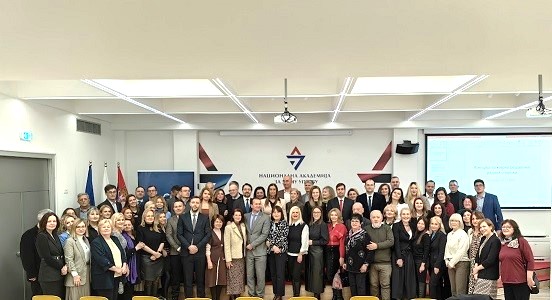
Organized by the Republic Agency for the Peaceful Settlement of Labor Disputes, the second training session for conciliators and arbitrators in the anniversary year marking 20 years of the Agency’s work was held on 12 December 2025 at the premises of the National Academy for Public Administration. The event was dedicated to the further improvement of the practice of the peaceful settlement of labor disputes, as well as to examining the psychological aspects of communication and working with challenging counterparts. For the first time, the training was also attended by representatives of agencies and bodies for the peaceful settlement of labor disputes from the region, namely Montenegro, North Macedonia, and the Republic of Srpska (Bosnia and Herzegovina).
The event brought together numerous experts in the fields of labor law and psychology, who, through lectures and discussions, addressed contemporary challenges in procedures for the peaceful settlement of labor disputes, with particular emphasis on building trust, managing resistance, and encouraging constructive dialogue.
As part of the formal opening ceremony, recognition awards were presented to distinguished conciliators and arbitrators with many years of experience, in acknowledgment of their continuous contribution to the development of the system of the peaceful settlement of labor disputes and the improvement of labor relations.
Recognition awards were presented to the following conciliators and arbitrators: Slađana Andrić, Radovan Bezbradica, Miljko Valjarević, Draško Veličković, Slađana Gligorić, Srđan Dobrica, Ružica Erceg, Nataša Zavođa, Dejana Spasojević Ivančić, Danka Jaćimović, Senad Jašarević, Predrag Jovanović, Igor Kokanović, Vera Kondić, Danijela Koštan Kovačević, Žarko Kovačević, Vladan Kovačević, Živko Kulić, Ankica Kurjački, Jasna Lazović, Vladimir Matić, Dragana Miletić, Katarina Nikolić, Goran Obradović, Milun Petković, Predrag Petrović, Milica Radivojević, Zorica Radović, Zoran Radulović, Danilo Rončević, Radmila Simović, Vesna Stojanović, Jelena Stojiljković, Predrag Trifunović, Bojan Urdarević, Verica Hrnčjar, Nada Crnja, Maja Čudomirović, and Aleksandra Ćalić Bošković.
Following the formal part of the event, a panel discussion was held. The first panel focused on current case law in the field of labor disputes, with the participation of judges from the Constitutional Court, appellate courts, and the High Court in Belgrade. The second panel was dedicated to the topic “The Challenge of Resistance: The Psychology of Relationships and the Possibility of Dialogue,” during which participants discussed psychological mechanisms influencing communication and conflict in labor relations, as well as practical techniques and tools for overcoming these challenges in practice.
12. December 2025.
At the Public Utility Company “Gradsko stambeno” Belgrade, following a request submitted by the company’s trade union organization, a collective labor dispute concerning amendments and supplements to the collective agreement was successfully concluded. Given that “Gradsko stambeno” performs activities of general interest, the Agency initiated the procedure ex officio, in accordance with the law, with the aim of enabling dialogue between the parties. Miljko Valjarević was appointed as the acting conciliator.
At the first hearing, a Conciliation Committee was established, composed of representatives of both parties to the dispute and the acting conciliator. Through discussions and the exchange of views, with the support of the conciliator, conditions were created for the continuation of social dialogue.
At its fourth hearing, the Conciliation Committee adopted a recommendation that the parties initiate negotiations on amendments and supplements to the collective agreement, with the aim of finding a joint and sustainable solution.
This procedure once again confirmed that mechanisms for the peaceful settlement of labor disputes contribute to the preservation of industrial peace and the stable functioning of public services of importance to citizens.
11. December 2025.
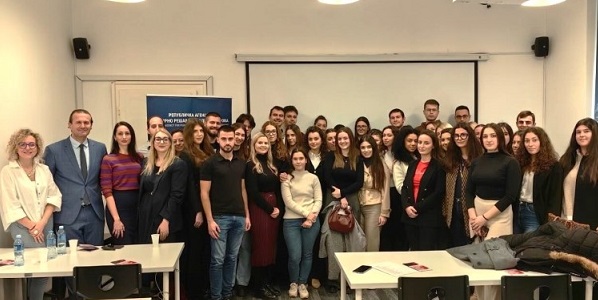
The Republic Agency for the Peaceful Settlement of Labor Disputes once again this year hosted the traditional visit of final-year students of the Faculty of Law of the University of Belgrade, who attend the Labor Law course. The visit took place on 10 December 2025 at the Serbian–Korean Information and Access Center (SKIP Center), within the framework of the Cooperation Agreement between the Agency and the Faculty of Law. The students were accompanied by Teaching Assistant Mina Kuzminac.
The event was opened by the Director of the Agency, Dr. Ivica Lazović, who emphasized the importance of the long-standing cooperation with the Faculty of Law, as well as the role of the Agency in bringing the institute of the peaceful settlement of labor disputes closer to future legal professionals. He underlined that the Agency is open to students who wish to become directly acquainted with the work of this institution through professional and scientific papers, as well as through internships. On that occasion, he presented the development of the institute of the peaceful settlement of labor disputes in the Republic of Serbia, its place in contemporary legal systems, and the key results achieved by the Agency so far, with an overview of challenges and plans for the future.
In the continuation of the program, Dragana Andonovska, Head of the Group for Legal and Professional Affairs, and Jelena Golubović, Advisor at the Agency, spoke about the Agency’s competences, fundamental principles and procedures, as well as statistical indicators and examples from its extensive practice. Special emphasis was placed on digitalization and digital transformation processes as an important step toward more efficient, accessible, and transparent resolution of labor disputes. Through concrete examples, it was demonstrated that even the most complex labor disputes can be successfully resolved through conciliation, provided there is willingness on the part of the parties to engage in dialogue and compromise.
The visit concluded with an open and interactive discussion with the students, who actively participated, asked questions, and shared their observations and views on the application of alternative methods for resolving labor disputes in the Republic of Serbia. This exchange of opinions once again confirmed the importance of linking theoretical knowledge with practical experience in the education of future legal professionals.
09. December 2025.
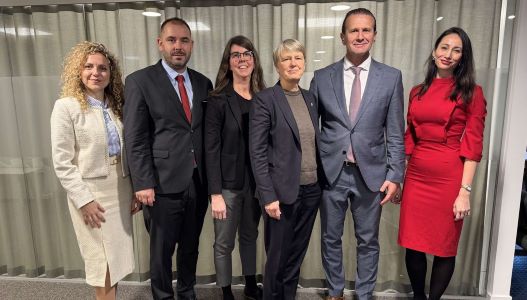
The delegation of the Republic Agency for the Peaceful Settlement of Labour Disputes paid a study visit to the Swedish National Mediation Office in Stockholm on 4 December 2025. The visit was organised with the aim of becoming acquainted with the Swedish model of work, exchanging experiences, and highlighting good practices that may contribute to the further development of the Agency’s capacities, as well as to the improvement of the system of peaceful settlement of labour disputes in the Republic of Serbia. During the visit, the Director of the Agency, Dr Ivica Lazović, presented a Certificate of Appreciation to the Swedish National Mediation Office as a token of recognition for the successful cooperation to date and for its support in the development of the practice of peaceful labour dispute resolution.
The Swedish National Mediation Office was selected as a partner due to its unique and highly successful experience in the field of labour dispute prevention, conciliation, collective bargaining, as well as its well-established model of tripartism and a high level of coordination among social partners.
The visit began with a meeting with the Director General of the Institute, Ms Irene Wennemo, and Legal Adviser Sofie Malmkvist, who presented the organisation, competencies, and key elements of the Swedish labour market model. The introductory session focused on the functioning of the labour dispute prevention system and conciliation mechanisms in cases where disputes arise, the importance of mediator independence, and the role of the Institute in maintaining stable industrial relations throughout the country.
The programme continued with a presentation by Mr Per Ewaldsson, Senior Legal Adviser, who provided a detailed overview of the legal framework for the peaceful settlement of labour disputes in Sweden. The discussion covered fundamental principles, the competencies of conciliators, and response mechanisms in cases of collective disputes, with reference to similarities and differences in comparison with the Serbian legal system.
Following the presentation of the legal framework, a session dedicated to practical examples was held, led by Ms Gunilla Runnquist, a conciliator with extensive professional experience, and Mr Per Ewaldsson. The delegation had the opportunity to become familiar with concrete procedures, the working methodology of Swedish conciliators, the challenges they face, communication techniques used in working with the parties to a dispute, and the tools applied in everyday practice.
Particular attention was drawn to the presentation on wage statistics, delivered by Mr John Ekberg, Director of Official Wage and Salary Statistics at the Institute, together with Statistician Mr Peter Beijron and Economist Mr Simon Thorstensson. The presentation covered existing statistical data, data collection and processing procedures, and the application of this information in collective bargaining processes, which is of particular importance when considering the enhancement of the Agency’s analytical capacities.
In the afternoon, a highly significant session was held on labour market organisation and collective agreements, which provided concrete guidance for possible improvements in the work of the Agency. Special emphasis was placed on the manner in which the Swedish National Mediation Office maintains comprehensive records of all collective agreements in the country, a practice that has proven to be a key instrument in supporting stable social dialogue and effective collective bargaining. Ms Anna Fransson, Senior Economist, together with Mr Thomas Ljunglöf and Ms Sofie Malmkvist, presented the role of the Institute in analysing collective agreements, mechanisms for monitoring collective agreements, and models that may serve as valuable reference points for strengthening institutional capacities in Serbia.
Members of the delegation included the Director of the Agency, Dr Ivica Lazović, who introduced the hosts to the Agency’s practice and organisational structure, Dragana Andonovska, Head of the Legal Affairs Unit, and Agency advisers Miloš Prokić and Jelena Golubović.
This study visit represents an important step in strengthening cooperation with Swedish institutions and provides a solid foundation for further enhancing the capacities of the Republic Agency for the Peaceful Settlement of Labour Disputes. The experiences gained and practices exchanged will be of great importance for the continued development of labour dispute prevention systems, conciliation processes, and the promotion of a culture of social dialogue in the Republic of Serbia.